Case Study: 4R Reedbed
4R Group Achieves Reedbed System for Surface Water Discharge from a New Housing Development – Bridlington.
Introduction
4R Reedbeds were contacted by a housing developer, who had a planning condition to implement regarding the discharge quality of surface water from a new housing development being built at Bridlington. The site is on, and adjacent to, a sensitive aquifer lying below chalk strata which is vulnerable to pollution.
BACKGROUND
XXXX
XXXX
Design Process
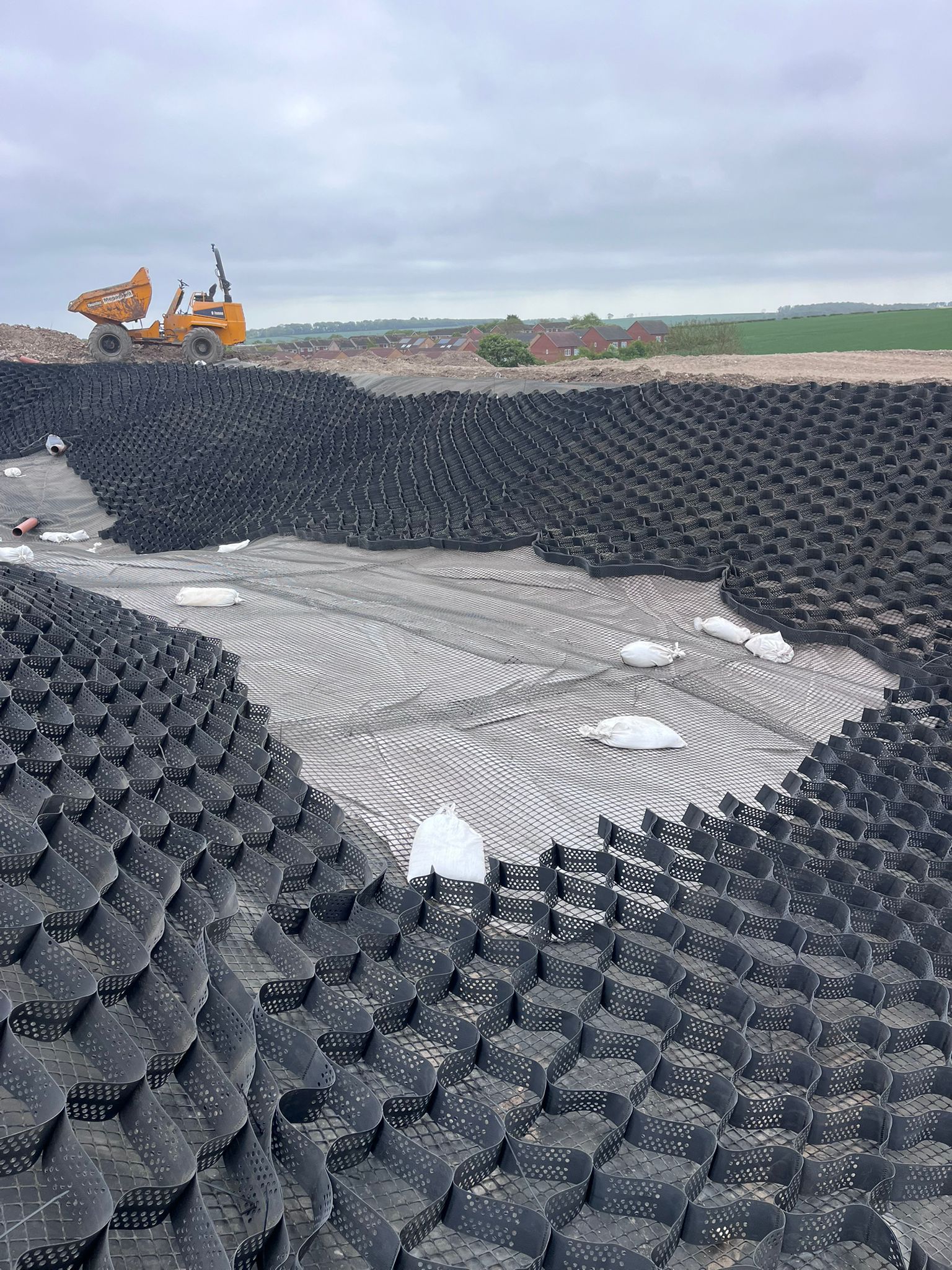
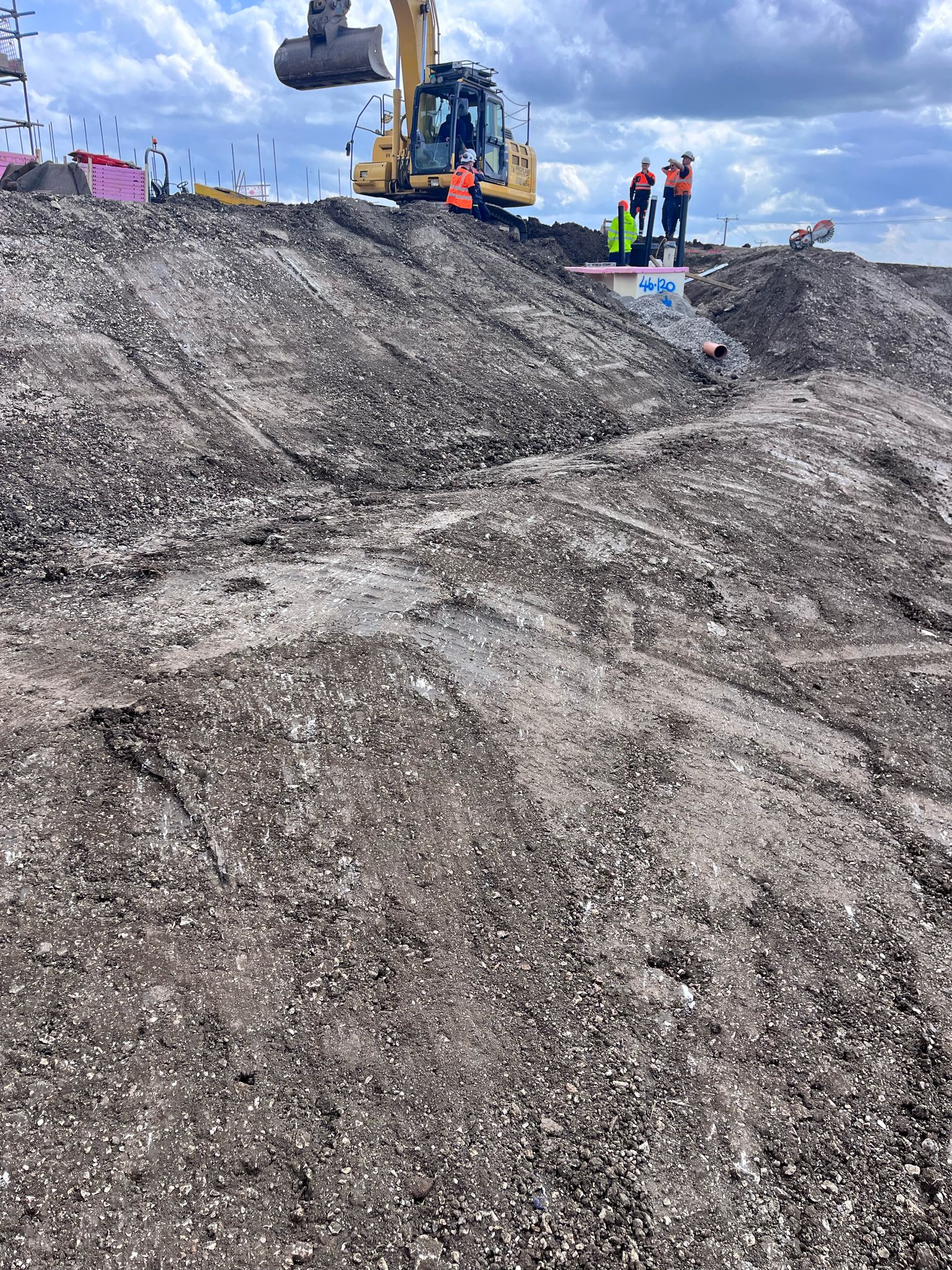
The developer had already decided on the location of the reedbed which was situated on the side of a steep hill and 4R Reedbeds were tasked to explore a design and method of installing the liner and retaining the soil on the steep sides to allow the reeds and vegetation to grow whilst preventing soil slippage or soil being washed away down the sides of the reedbed banks. The brief also included a requirement that the completed reedbed was aesthetically pleasing as it was adjacent to newly built properties and visible to the occupants of the homes being built.
Construction Method
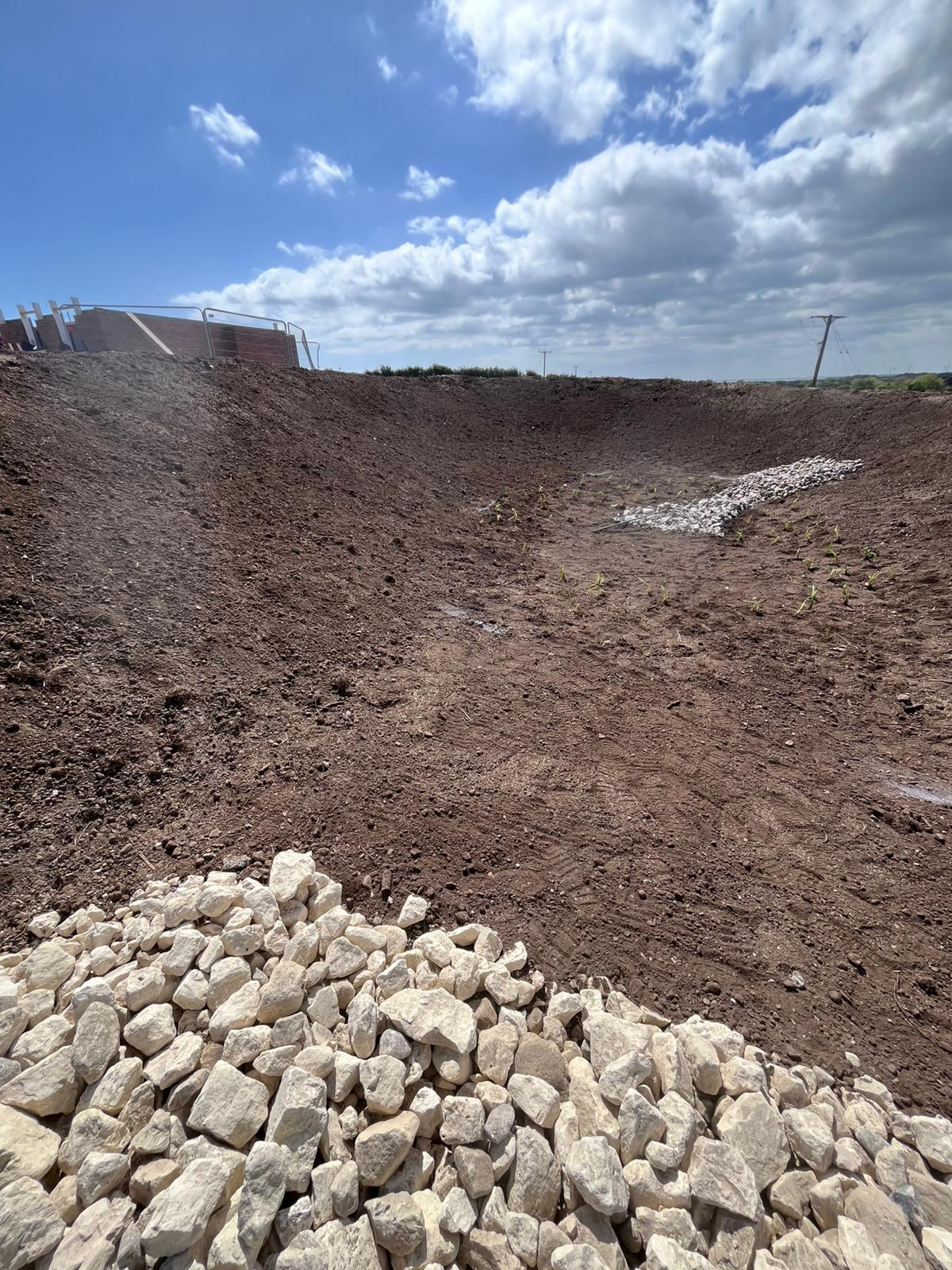
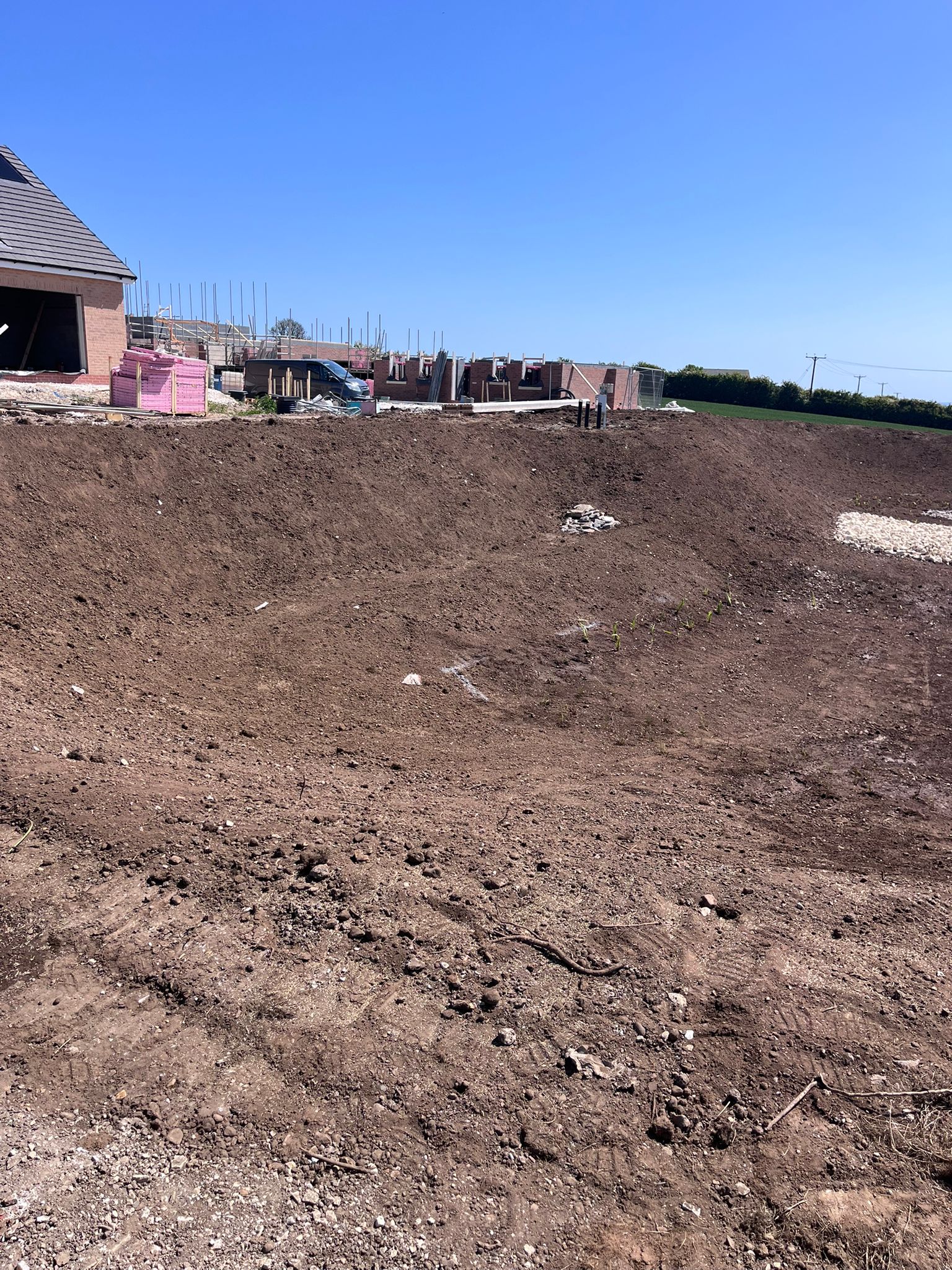
The reedbed was built with a gradual sloping swale entry point leading to two split-level deeper ponds. The split-level ponds allowed for incoming water to be held in the upper pond before reaching the desired height and trickling through a stone filter divider into the lower pond. Once in the lower pond, the water level would again reach the set level of the final discharge pipe and out via pipework to the soak-away.
Works Undertaken
Excavation: When the levels for the inlet and outlet had been established, we were able to start the final contouring and grading of the reedbed surface before installing a 1mm HDPE liner across the whole reedbed.
Liner Installation: Compacted sand and a textile bedding liner were placed to protect the liner with welded seams tested for integrity and secured with an anchor trench around the top circumference of the reedbed.
Soil Retention: In order to retain the imported growing media/soil on the steep reedbed banks, a GeoGrid and GeoCell soil retaining system was installed on top of the liner, ensuring we could provide 300mm of growing media across the whole reedbed which is required for the plants and reeds to flourish.
Growing Media Placement: Both the inlet and outlet pipes were surrounded and protected using imported clean stone along with the central pond divider before the imported soil media at a depth of 300mm was spread and lightly compacted across the whole reedbed.
Planting: The following species of reeds were planted in various zones throughout the reedbed to enhance the aesthetics; reeds such as the Schoenoplectus lacustris – Common, Club-Rush, Phragmites Australis – Common Reed and the Iris Pseudacorus – Flag Iris. Once planted a controlled level of water was introduced to allow the reeds to establish over the coming months.
Aftercare: 4R Reedbeds have been commissioned to provide periodic testing of the final water discharge and maintenance of the reedbed to ensure it remains functional and works as per the design specification
Need expert advice on reedbeds? Speak to our team.